

You turn on the tap, brush your teeth, and watch the water pool around the drain instead of disappearing. A minute later, it’s still sitting there. Sound familiar? For a lot of Victoria homeowners, this is the moment they start Googling home remedies, and it’s also the moment they risk doing more harm than good. Store-bought drain cleaners promise a quick fix, but poured into older cast iron or galvanized pipes common in Victoria’s character homes, they can eat away at seals, weaken joints, and turn a simple clog into an expensive repair.
The good news is that knowing how to clean a bathroom sink drain properly doesn’t require harsh chemicals or plumbing experience. It just requires the right approach, done in the right order, with the right tools. Below, we’ll walk you through exactly how to safely clear a sluggish bathroom sink, what’s actually causing the buildup, and when it’s time to stop DIY-ing and call in a professional.
Why Is Your Bathroom Sink Draining So Slowly?
Before reaching for anything, it helps to understand what’s actually clogging the pipe. In almost every bathroom sink, the culprit is some combination of hair, soap scum, toothpaste residue, and mineral deposits from Victoria’s water supply. These materials cling to the inside walls of the pipe, narrowing the passage a little more every week until water barely moves through it.
A slow-draining bathroom sink is rarely a sudden problem. It builds gradually, which is exactly why so many homeowners ignore it until the sink stops draining altogether. If you’ve noticed gurgling sounds, a faint sewer-like odour, or water that takes longer to clear than it used to, those are early warning signs worth acting on now rather than waiting for a full blockage.
How to Unclog a Bathroom Sink Without Chemicals
Skip the chemical drain cleaner. Here’s a safer, step-by-step method that delivers results without risking your pipes.
Step 1: Remove the Visible Debris
Start by pulling out anything sitting near the drain opening. A bent wire hanger or a plastic drain-cleaning tool (inexpensive and available at most Victoria hardware stores) can hook and pull out hair clumps sitting just below the surface. This alone often resolves a minor unclogged bathroom sink.
Step 2: Try the Hot Water Flush
Boil a kettle of water and pour it down the drain in two or three stages, letting it sit for 20 to 30 seconds between pours. This softens grease and soap scum without stressing PVC, unlike piping, which can stress certain plastic fittings when heated.
Step 3: Use Baking Soda and Vinegar
This is the most reliable natural bathroom sink drain cleaner homeowners ask us about, and it genuinely works. Pour half a cup of baking soda down the drain, follow with half a cup of white vinegar, and cover the opening for 10 to 15 minutes while the reaction fizzes and loosens buildup. Rinse with hot water afterward. This combination is one of the safest drain cleaning methods because it won’t corrode pipe seals or rubber gaskets the way commercial cleaners can.
Step 4: Plunge It Properly
If water still isn’t draining, a small sink plunger (not the larger toilet variety) can create enough suction to dislodge stubborn clogs. Block the overflow hole with a wet cloth first so the plunger builds proper pressure, then plunge in short, firm strokes.
How to Remove Hair and Soap Scum From a Bathroom Sink Drain
Hair and soap scum are the two biggest offenders in Victoria bathrooms, especially in households with long hair or older fixtures with narrower drain openings. To remove hair from bathroom sink drain components effectively, unscrew or lift out the pop-up stopper (most twist counter-clockwise or lift straight out after loosening the pivot rod underneath the sink) and clean it thoroughly, since this is where the majority of hair actually collects before it ever reaches the pipe. A stiff-bristled brush or old toothbrush works well here.
Once the stopper is clean, run hot water for a minute to flush out any loosened residue. Doing this every few weeks prevents the kind of buildup that eventually needs professional attention.
Cleaning the Bathroom Sink Stopper
Bathroom sink stopper cleaning is often the missing step in most people’s routine. Even after a thorough drain flush, a dirty stopper can cause water to drain slowly because grime builds up, causing it to drip back onto the surface and back into the pipe. Soak the stopper in warm water with a splash of vinegar for 15 minutes, scrub gently, and rinse before reinstalling. It’s a small habit that goes a long way toward keeping your bathroom sink drain-cleaning routine effective in the long term.
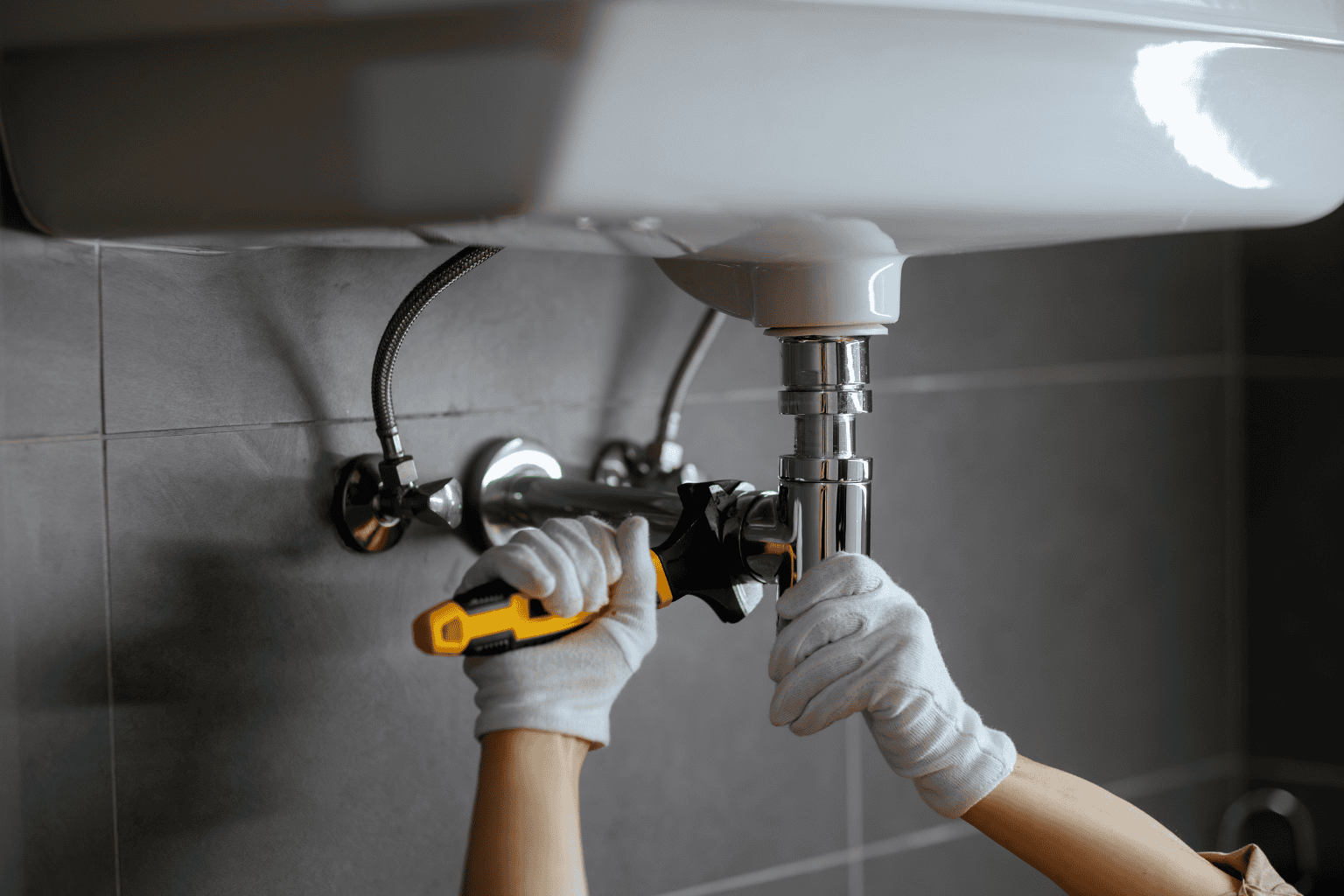
How to Clean a Bathroom Sink P-Trap Safely
If the steps above haven’t solved the problem, the clog is likely sitting in the P-trap, the curved section of pipe beneath your sink that holds a small amount of water to block sewer gas from entering your home.
Here’s how to clean a bathroom sink P-trap safely:
- Place a bucket underneath the P-trap to catch any water and debris.
- Loosen the two slip nuts connecting the trap to the pipes using channel-lock pliers (hand-tighten only, never overtighten with force).
- Remove the P-trap and empty its contents into the bucket, checking for hair, buildup, or small objects.
- Rinse the trap thoroughly and inspect the rubber washers for cracking or wear.
- Reattach the trap, hand-tighten the nuts, then give them a quarter turn with pliers.
- Run the tap for a minute and check underneath for leaks.
This is the point where a lot of Victoria homeowners get nervous, and rightly so. Older homes in neighbourhoods like Fairfield, James Bay, and Oak Bay often have plumbing that’s been modified over the decades, with fittings that don’t match current standards. If the slip nuts won’t budge, the washers are brittle, or you’re not confident you can reassemble everything watertight, it’s worth stopping here rather than forcing a repair that could crack the trap or damage the connecting pipe.
What to Avoid When Cleaning a Bathroom Sink Drain
A few things can turn a minor clog into a bigger, more expensive problem:
- Chemical drain cleaners can corrode older pipes, damage rubber seals, and pose genuine hazards if the clog doesn’t clear and the chemical sits in standing water.
- Wire hangers pushed too far can scratch or puncture the walls of pipes, particularly in thinner PVC fittings.
- Overtightening P-trap connections often cracks the plastic nuts or strips the threads, leading to leaks under the sink.
- Ignoring a persistent bathroom sink drain smell rather than investigating it, since lingering odours often point to a P-trap losing its water seal or a deeper blockage further down the line.
When It’s Time to Call a Professional
If you’ve worked through these steps and your bathroom sink drain is still slow—or the clog keeps returning every few weeks—it may indicate that the blockage is located farther down the drain line than a homeowner can safely reach. Recurring drainage problems can also point to a venting issue or a larger buildup affecting multiple fixtures, particularly in Victoria’s older homes.
This is where a professional plumbing drain cleaning service can make a difference. At Impact Plumbing & Heating Ltd., owner and operator Mike Duncanson brings more than 20 years of hands-on experience to every project. As a Red Seal-certified journeyman in plumbing and gas fitting, licensed gas contractor, and certified cross-connection control and CRD backflow equipment tester and installer, Mike has the training and experience to identify the source of the problem and recommend the appropriate solution.
Our fully licensed, insured, bonded, and WCB-compliant team uses professional-grade equipment to clear blockages without unnecessary guesswork or the risk of damaging your pipes with an aggressive DIY fix. As a locally owned plumbing company based in Victoria, BC, we understand the plumbing systems, building ages, and common drainage issues found throughout the city’s neighbourhoods. Contact us to schedule professional drain cleaning and get your sink flowing properly again.
Why Victoria Homeowners Trust Impact Plumbing & Heating
Choosing the right drain cleaning service is not only about clearing today’s clog. It is about working with a local plumbing company that provides dependable workmanship, honest advice, and long-term solutions.
- More than 20 years of experience: Owner and operator Mike Duncanson brings extensive hands-on plumbing experience to every service call.
- Over 10,000 projects completed: Our team has successfully handled thousands of plumbing projects for homeowners throughout Victoria and the surrounding communities.
- Trusted by thousands of customers: Our positive Google reviews reflect our commitment to reliable service, careful workmanship, and customer satisfaction.
- Preventative approach: We do more than clear the immediate blockage. We assess what may be causing the problem and recommend solutions designed to help prevent recurring drainage issues.
- Clear explanations: Our licensed team explains what is happening, discusses the available options, and helps you make an informed decision.
- Transparent pricing: You receive clear, upfront pricing without hidden fees, unexpected charges, or unnecessary upselling.
- Quality workmanship: Whether you have a slow bathroom sink or a blockage affecting multiple fixtures, our goal is to complete the work properly the first time.
Ready to Get Your Bathroom Sink Draining Properly Again?
A slow bathroom sink rarely fixes itself, and the longer the buildup sits in your pipes, the more likely it is to become a bigger repair down the road. If the steps above haven’t cleared things up, or you’d simply rather leave it to a licensed plumber in Victoria, BC, our team is one call away. We’ll get to the root of the clog, protect your pipes in the process, and make sure it’s handled right, without pressure or hidden costs.
Call Impact Plumbing & Heating Ltd. today at (778) 350-3535 or use our contact page to book your drain cleaning service.
FAQs
Is it safe to pour boiling water down a bathroom sink drain?
Yes, but pour it in stages rather than all at once, especially if you have PVC piping, since a sudden temperature change can stress the joints and seals over time.
How often should I clean my bathroom sink drain?
A quick baking soda-and-vinegar flush every 4 to 6 weeks helps prevent buildup before it turns into a full clog, especially in households with long hair.
Why does my bathroom sink drain smell bad even when it's draining fine?
A lingering odour usually means the P-trap has lost its water seal or that organic buildup is trapped along the pipe walls, both of which are worth checking before they worsen.
Can I use a chemical drain cleaner if home remedies don't work?
We’d recommend against it, particularly in older Victoria homes, since chemical cleaners can damage pipe seals and joints; a professional auger or hydro-jetting service is a safer next step.
How do I know if the clog is in the P-trap or further down the line?
If clearing and reinstalling the P-trap doesn’t restore normal drainage, the blockage is likely further down the branch line, which typically requires professional equipment to reach safely.
Do you offer drain cleaning for older homes with original plumbing?
Yes. We regularly work on character homes throughout Victoria and take extra care with aging fittings, fragile connections, and outdated pipe materials during every drain cleaning service.